About Course
September 9-12, 2026
Social Workers and Counselors- application pending for approval by the NASW Ohio Chapter for 30 CEUs in Ohio.
This training is designed to cover the primary core training elements needed to begin adventure therapy practice, introducing participants to a variety of low cost, low technical skill interventions that you can implement quickly into practice. Our guiding philosophy is that learning a clinical model for practice provides the foundation to use a multitude of activities in the process of therapy!
Built around AEE’s Certified Clinical Adventure Therapist (CCAT) and Certified Therapeutic Adventure Specialist (CTAS) training structure, we’ve designed this training to meet 43 of the 75 required core training hours needed for your CCAT/CTAS application. The content will span multiple aspects of AT practice: foundations, assessment, intervention, facilitation, technical skills, administration, ethics and values, monitoring, and more! Participants will gain a solid foundation in a model for the clinical practice of adventure therapy.
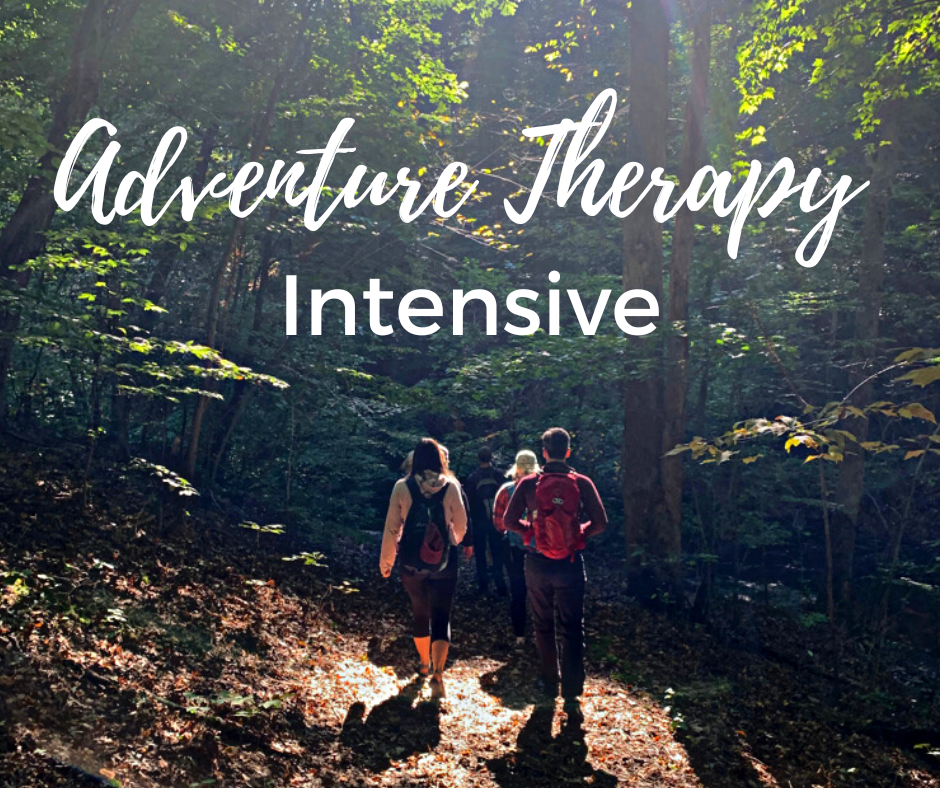
The course is centered around a 4-day, 33 hour, in-person intensive located at the beautiful Camp Mary Orton in Columbus, OH. The additional 10 hours of course content will be conducted virtually prior to this 4-day program. Participants will be trained in the clinical and technical skills needed to conduct accessible adventure interventions including games, initiatives, hiking, creeking, outdoor cooking, campfires, and orienteering. Lunch and snacks will be provided.
Register before August 7th to receive the Early Bird Registration rate! This training has a minimum participant number of 9 participants. The decision will be made by August 10th about whether or not the course will be held. If the course is canceled by Adventure Therapist, LCC, registrants will be refunded their full payment.
Program Dates (all times in US Eastern)
| Aug 7 | Early Bird Registration Deadline |
| Aug 10 | Cancellation Date, if minimum enrollment is not met |
| Aug 1 – Sept 8 | Complete pre-course virtual training (10 hours) Content opens Aug 1. |
| Aug 10 | Orientation 6:00 pm – 8:00 pm (live zoom meeting) |
| Sept 9 | AT Intensive Day One: 9:00 am – 5:30 pm |
| Sept 10 | AT Intensive Day Two: 9:00 am – 5:30 pm |
| Sept 11 | AT Intensive Day Three: 9:00 am – 8:00 pm |
| Sept 12 | AT Intensive Day Four: 9:00 am – 5:30 pm |
Course Content Outline
- Orientation (2.0 Virtual / Live)
- Overview of course and concepts
- Preparing for the AT Intensive
- Getting Started with Adventure Therapy (1.0 Virtual Asynchronous)
- What is Adventure Therapy?
- Adventure Therapy Competencies
- Adventure Therapy Illustrated
- Adventure Therapy Ethics (1.0 Virtual Asynchronous)
- Informed Consent and Scope of Practice
- Inclusion and Trauma-Informed Care
- Environmental Stewardship
- Clinical Cost / Benefit Considerations
- The Facilitated Wave Model: A Clinical Model for Adventure Therapy Practice (2.0 Virtual Asynchronous)
- Overview of the Facilitated Wave Model
- Clinical Applications of Adventure Therapy (3.0 Virtual Asynchronous)
- Theoretical Foundations
- Adventure Therapy Components
- Clinical Applications of Adventure Therapy
- Standards of Care and Risk Management in Adventure Therapy (3.0 Virtual Asynchronous)
- Overview of Merging Adventure and Clinical Practice
- Duty of Care, Industry Standards, Risk Management, Informed Consent
- Clinical Responsibilities (intentional practice, documentation, insurance)
- Adventure Responsibilities (training, safety, policy and procedure, emergency response, documentation)
- Adventure Therapy Intensive (33.0 In-Person / Live)
- Foundations
- The Facilitated Wave Model: Guiding the Response, Assessment, Matching Interventions, Shaping the Treatment Environment, Facilitating the Experience, Evaluation
- Technical Skills for AT Interventions
- Activity-Specific
- Cooperative Games, Initiatives, Spotting, Hiking, Creeking, Orienteering, Outdoor Cooking, Campfires
- Rescue Skills
- Emergency Response Planning
- General Skills
- Client Care, Being Outdoors, Basic Land Navigation
- Activity-Specific
Logistics
Course Content
Orientation
Adventure Therapy Intensive (In-Person)
Course Evaluation & Certificate
Student Ratings & Reviews